


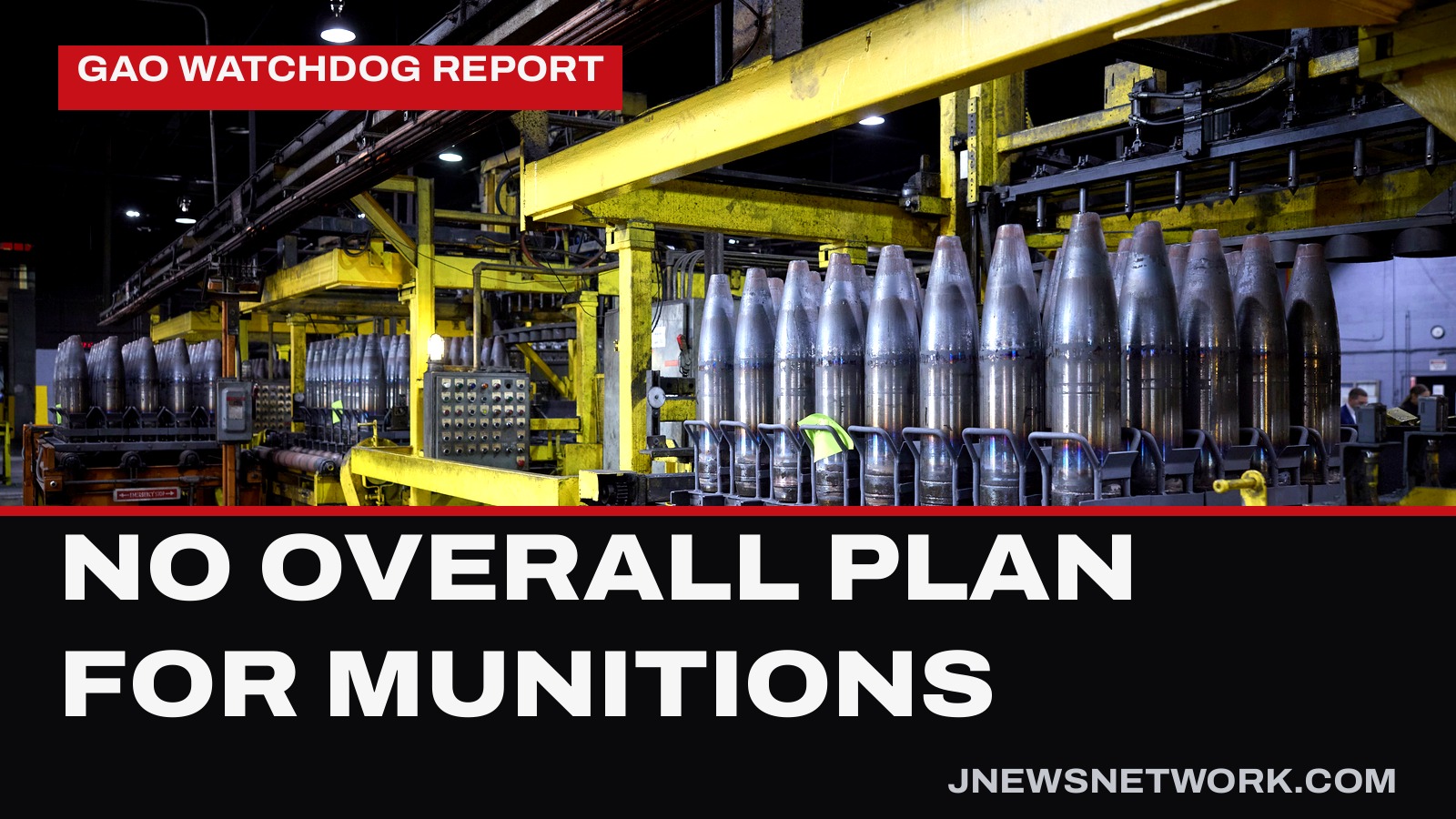
The Pentagon is ramping up production of missiles, artillery shells and other munitions without an overarching plan that ties what it builds to what the military actually needs, the Government Accountability Office said in a report released Thursday.
The report, GAO-27-109420, found that the Department of Defense “does not have an overarching plan that links munitions production and funding to requirements.” According to the report, Defense Department officials told investigators that “in lieu of a plan, DOD and the services can be reactive to global events rather than driven by total requirements.”
GAO pointed to the Army’s ramp-up in production of 155-millimeter artillery shells as an example. The increase addressed shortages made worse by U.S. support to allies and partners, the report said, but it was not driven by the Defense Department’s total munitions requirement.

Without an overarching plan that sets long-term goals, strategies and metrics to gauge progress, GAO said, the department and the services “are not well-positioned to address persistently low munitions inventories” and risk investing in munitions that are projected to exceed the total munition requirement.
The report also found that the department has not designated an office or entity to direct and assess munitions inventory improvement actions. Officials from the Joint Staff and the Air Force, Army, Navy and Marine Corps told GAO there could be a benefit to developing an overarching plan and assigning leadership for it, and service officials said that without an office with dedicated leadership, it may be difficult to realize progress in addressing munitions shortages at any level.
GAO further found that the department has limited oversight of the department-wide munitions data tool it uses to track munitions, and that it has not regularly conducted inventory reconciliations with the services. Setting consistent, regular timelines for reconciling information, GAO said, would help ensure senior leaders receive high-quality data on which to base decisions.
The findings land as the Pentagon works to rebuild stocks. In 2025, the department’s Acting Assistant Secretary of Defense for Sustainment testified that the department had a shortage of several key munitions, and the department has taken steps including establishing munitions working groups focused on increasing production. GAO said the 2026 conflict with Iran has heightened the importance of addressing munitions stockpile and industrial base challenges.
GAO made four recommendations, including that the Defense Department develop an overarching munitions plan to improve inventory levels, identify an office or entity and empower its leadership with the authority to implement the plan, and set regular timelines for inventory reconciliation. The department generally concurred with the recommendations, GAO said.
The study was required by a provision in House Report 118-529, accompanying the National Defense Authorization Act for Fiscal Year 2025. GAO analyzed service munitions data and department plans, conducted site visits to four Army ammunition facilities, and interviewed officials across the department, including from the Office of the Under Secretary of Defense for Acquisition and Sustainment, the Joint Staff and the military services. The report released Thursday is a public version of a classified report GAO issued on September 24, 2026; it omits information the department deemed classified or sensitive, including trends in munitions inventories, persistent shortfalls, and how those shortfalls have affected the department’s support to war plans.



One thought on “Pentagon has no overarching plan to fix munitions shortages, GAO finds”