


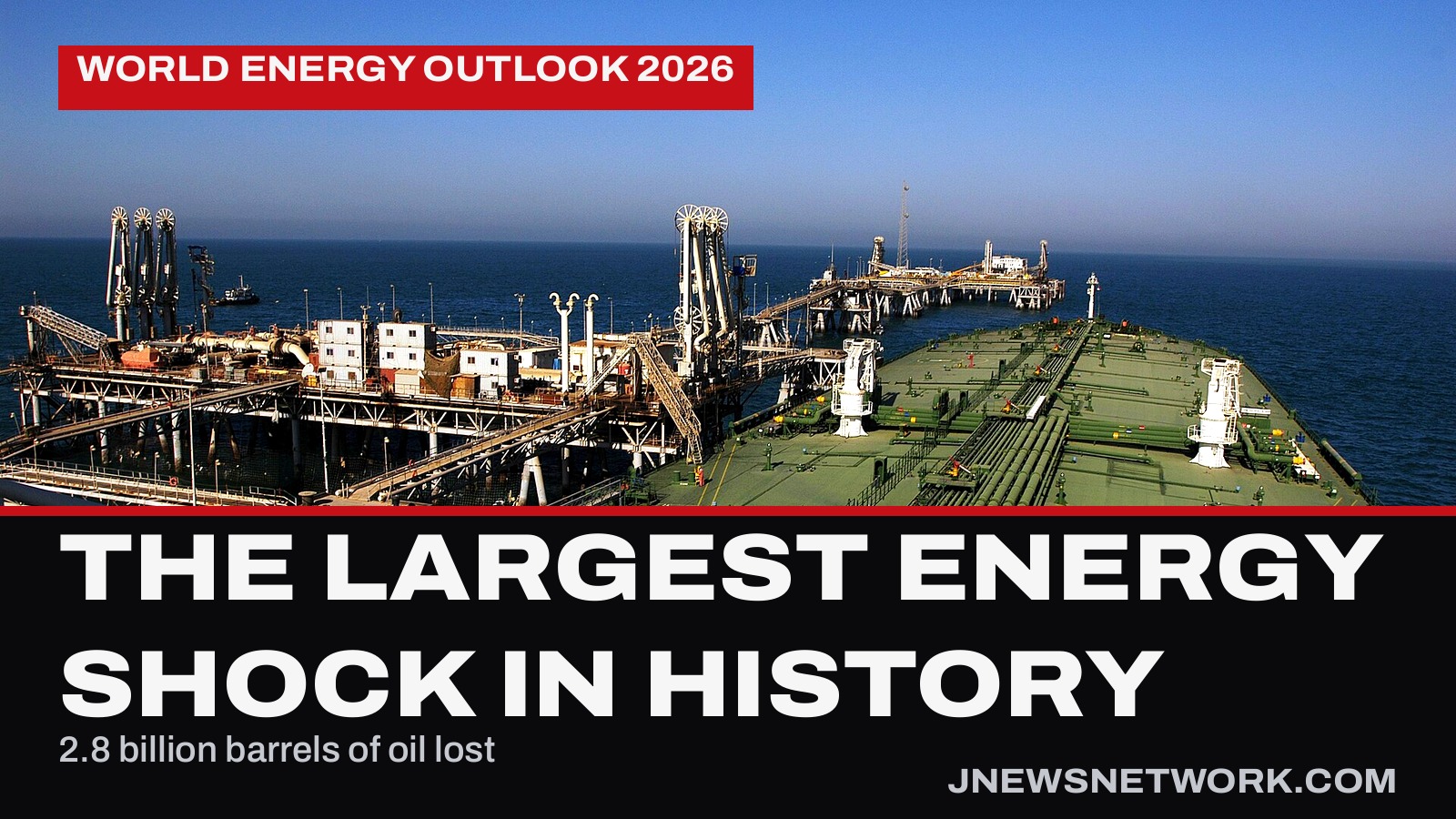
PARIS — The disruption to energy flows through the Strait of Hormuz during the war with Iran is the largest energy supply shock the world has faced, the International Energy Agency said Thursday, putting the cumulative losses at 2.8 billion barrels of oil and 60 billion cubic meters of natural gas supply from the Gulf.
The figures come from the agency’s World Energy Outlook 2026, released Thursday. “The disruption to energy flows through the Strait of Hormuz in 2026 has been the largest energy supply shock that the world has faced and – as of November – it is not over,” the report’s executive summary states (International Energy Agency, 2026).
“The Hormuz crisis has delivered a huge shock to the system,” IEA Executive Director Fatih Birol said in the agency’s release of the report. “While the energy sector and the global economy have shown considerable resilience, the longer the crisis lasts, the deeper the effects will be. And I don’t see any credible pathway for the energy world to return to the way it was before” (International Energy Agency, 2026).

The report says the energy system absorbed the initial shock through inventories and rerouted supplies, but that the burden is increasingly falling on consumers. Diesel — which the agency calls the workhorse of the global economy — has come under extreme pressure, with prices hitting record levels above $200 a barrel, according to the executive summary. More than 4 billion people live in countries that depend on the Strait of Hormuz for more than 30% of their oil supplies, and before the crisis about 80% of the oil and almost 90% of the liquefied natural gas passing through the strait was destined for Asia (International Energy Agency, 2026).
Governments and markets have already mounted an emergency response. Drawdowns of oil inventories in 2026 included the largest-ever coordinated release of oil stocks by the IEA, the report says, and about 7 million barrels per day of new pipeline projects are under construction or under consideration to let Gulf producers reach world markets without transiting the strait, at an estimated cost of about $40 billion (International Energy Agency, 2026).
The outlook also maps how permanently the crisis could redraw energy trade. In a case where risks to Hormuz shipping remain high for years, the IEA finds that bypass pipelines, alternative supplies and demand cuts by importers could reduce the oil that needs to move through the strait from 20 million barrels per day before the crisis to 8.5 million barrels per day in 2030 and to under 2 million by 2035 — though even then, the Middle East would remain the world’s largest oil-exporting region, according to the agency. The report’s main scenarios assume shipping through the strait returns to unimpeded transit by the end of 2027, and in its Additional Response Case — in which security concerns drive faster electrification, efficiency and fuel-switching — global oil use in 2035 comes in more than 4 million barrels per day lower than under stated policies (International Energy Agency, 2026).
Birol stressed that the outlook’s scenarios are not forecasts. “By providing multiple scenarios – none of which are forecasts – and analysis of unparalleled scope, it can serve as a reference as countries consider their next steps,” he said (International Energy Agency, 2026).