


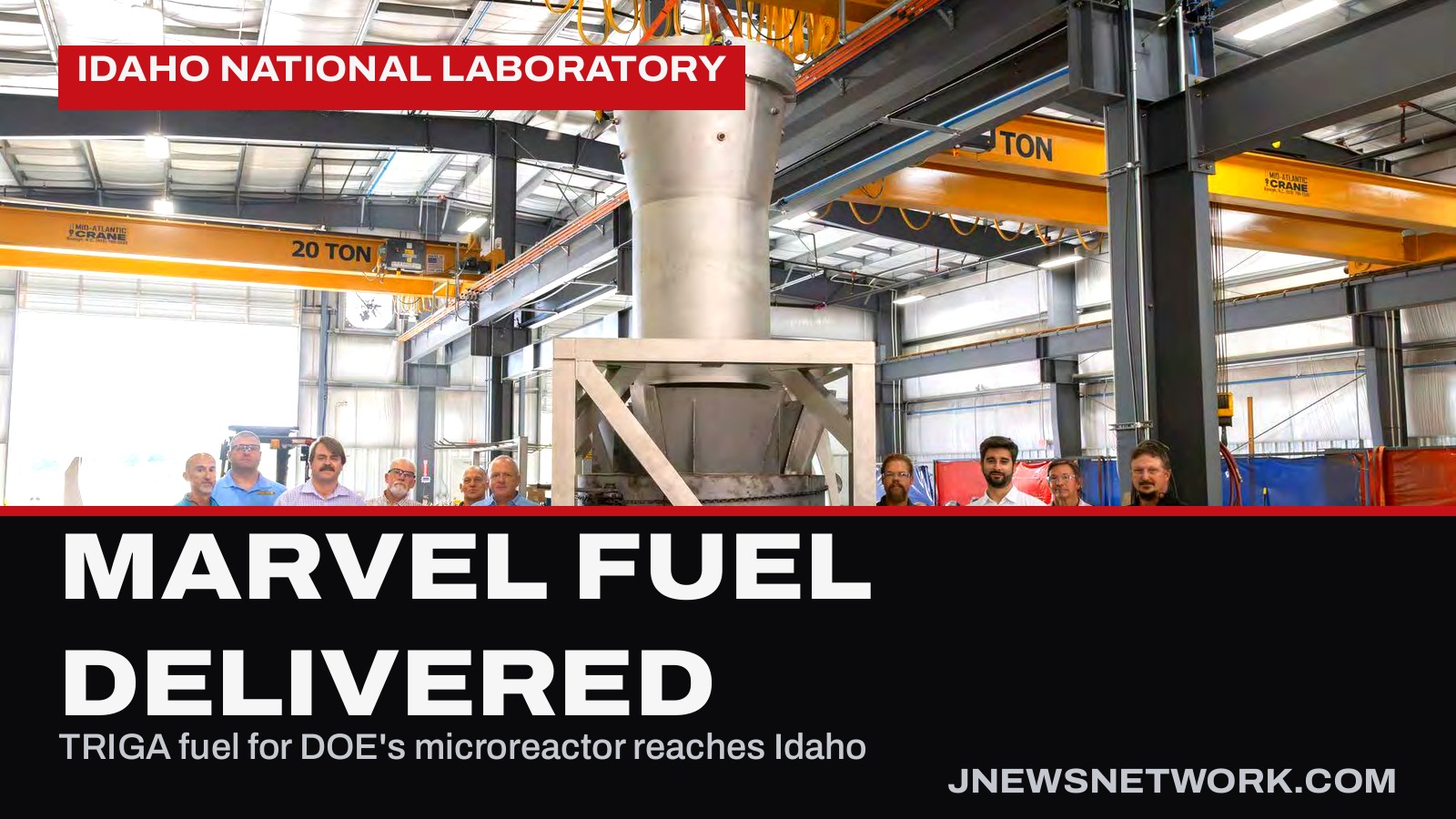
Idaho National Laboratory announced Thursday that TRIGA fuel fabricated by Framatome for the U.S. Department of Energy’s MARVEL microreactor has been delivered to the laboratory — a step the lab described as bringing the reactor “one step closer to fueling and criticality” (INL announcement, Nov. 19, 2026).
MARVEL — the Microreactor Applications Research Validation and Evaluation project — is led by INL under the DOE Microreactor Program as a first-of-a-kind test bed for microreactor applications, according to INL’s MARVEL project page.

The fuel is uranium-zirconium-hydride, a version of TRIGA fuel similar to what is used in university research reactors across the country, INL says. The Department of Energy’s Office of Nuclear Energy said in February 2024 that 37 TRIGA fuel elements would be fabricated by TRIGA International — a Framatome and General Atomics joint venture — in Romans, France. INL’s fiscal 2026 Nuclear Science & Technology Research Impacts report said 14 of the elements were complete, with 23 on track for November delivery.
The delivery follows the project’s federal safety approval. INL’s final Documented Safety Analysis was approved by DOE’s Idaho Office in September 2026, and the reactor’s primary coolant system and guard vessel were delivered that same month, according to the FY26 report and INL’s Oct. 6, 2026 announcement.
MARVEL is a sodium-potassium-cooled microreactor that uses natural circulation cooling, operates at 500 to 550 degrees Celsius, and produces 85 kilowatts of thermal energy and approximately 10 kilowatts of electricity, INL says. The reactor stands around 15 feet tall — approximately the size of a sedan — and is slated to be installed at the Transient Reactor Test (TREAT) facility at INL’s Materials and Fuels Complex, with final reactor assembly expected in 2026 and installation in TREAT starting in late 2026.
INL’s FY26 report says the November fuel delivery supports MARVEL’s December 2026 dry criticality date — the milestone at which the reactor first sustains a controlled nuclear chain reaction without coolant running through the system. INL’s project page, updated in October, gives a later timeline, anticipating dry initial criticality in 2027.