

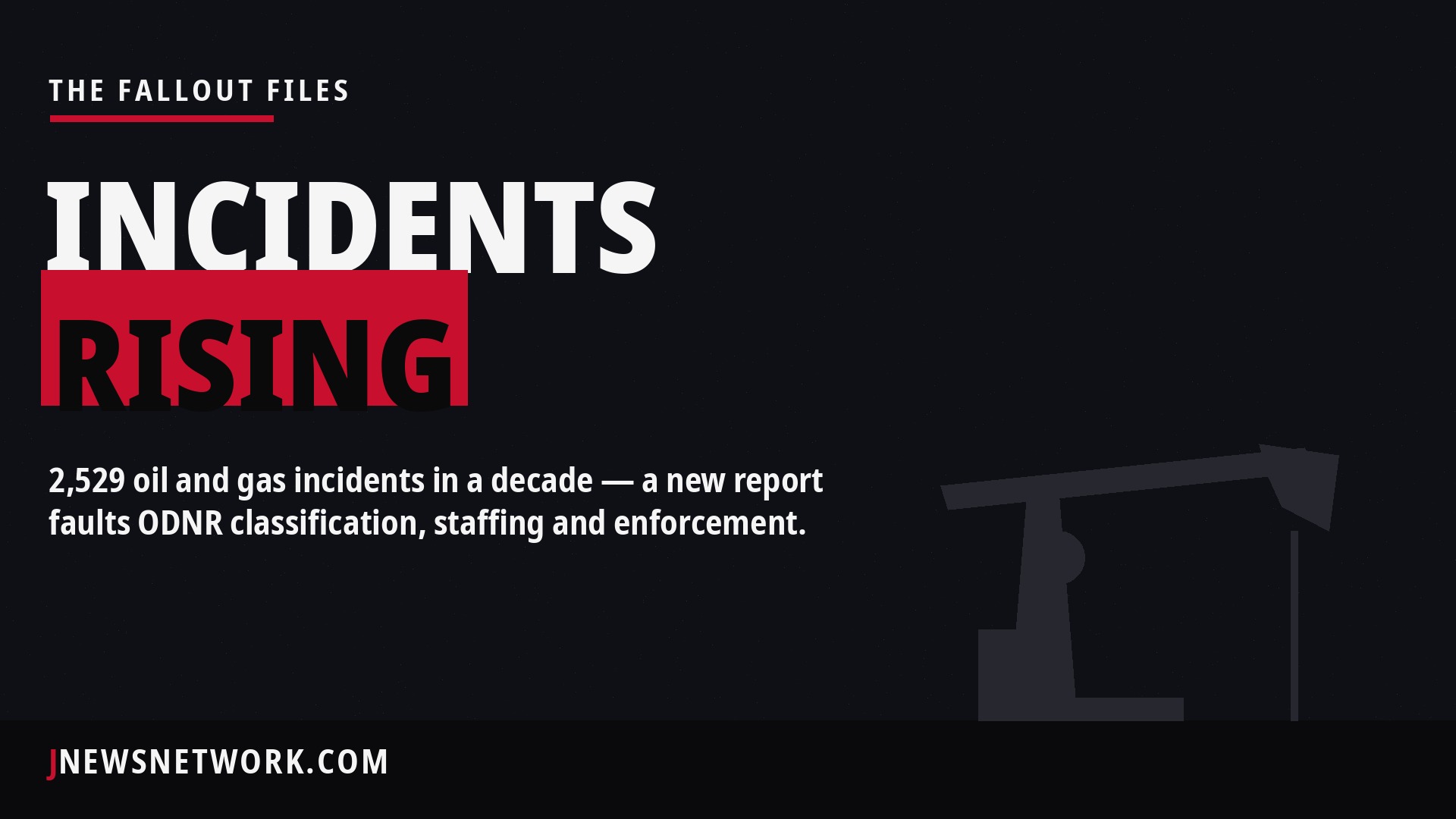
Ohio recorded 2,529 oil and gas incidents between 2015 and 2025, and the yearly count more than doubled over the decade — rising from 103 in 2015 to 268 in 2025 — according to a report released Wednesday by FracTracker Alliance and Buckeye Environmental Network.
The analysis of Ohio Department of Natural Resources records found persistent problems with how incidents are classified, how many wells each state inspector must cover, and whether enforcement followed, the groups said.
“Ohio is recording more oil and gas incidents, but the records still make it too hard to tell how serious many were and what, if anything, happened afterward,” said Gwen Klenke, the report’s author. “ODNR needs more inspectors, clearer incident records, and enforcement of the laws already on the books.”
Some incidents were classified as minor, the report found, including a 2025 spill of 1,000 gallons of crude oil that reached a tributary. The report said incident records often do not clarify whether enforcement or follow-up actions were taken, leaving Ohioans in the dark about whether the industry is being held accountable.
According to the release, ODNR says its oil and gas division seeks to “return the regulated community to compliance at the lowest level of enforcement possible.”
Roughly 25 ODNR inspectors are responsible for about 96,000 active oil and gas wells, the report found. Based on recent inspection durations, FracTracker estimated that visiting each active well once would take an average of 664 workdays per inspector — more than two and a half working years between visits to the same well.
“With fracking now expanding into our state parks and public lands and national news stories about toxic waste tied to injection wells bubbling up to the surface, many eyes are on the lax oversight of the oil and gas industry in Ohio,” said Bev Reed, an Appalachian organizer with Buckeye Environmental Network. “The findings from this new report are alarming.”
“It is shameful the way ODNR has turned its back on Ohioans by ignoring our pleas for help,” said Bob Wilson, a conventional oil and gas well owner-operator in Washington County, who said small producers have had wells ruined and properties contaminated by nearby injection wells. “We have lost all faith in the agency charged with regulating the industry and enforcing the laws.”
Ahead of the oil and gas division’s rulemaking submission to the Ohio Legislature on Jan. 13, 2027, the groups called on ODNR to make incident reports clearer and more accessible, increase the number of inspectors, and pursue formal enforcement for long-running incidents and violations, including civil penalties and immediate stop-work orders until contamination is remediated.
The full report, an interactive incident map and the underlying incident data are posted at fractracker.org. The groups’ release did not include a response from ODNR.