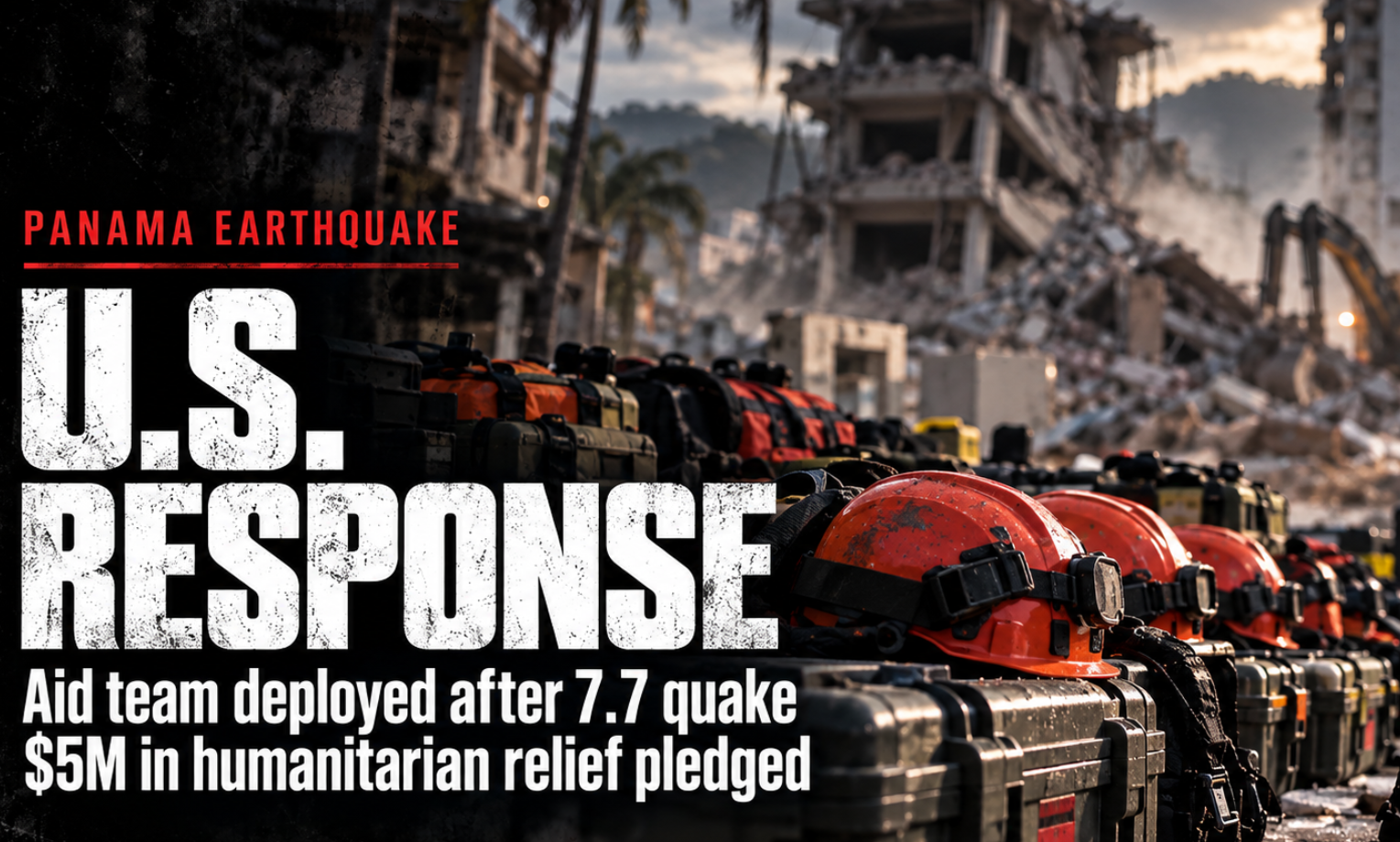
WASHINGTON — American disaster response specialists have arrived in Panama as the Central American nation begins recovering from a powerful earthquake that damaged homes, schools, hospitals and transportation infrastructure, prompting a national emergency declaration.
The U.S. State Department announced Saturday that it had committed $5 million in humanitarian assistance and dispatched a 20-member urban search-and-rescue contingent following the magnitude 7.7 earthquake that struck Friday, Oct. 9.
The specialists arrived within 24 hours of the earthquake and are conducting structural damage assessments alongside Panamanian authorities, according to an October 10 State Department fact sheet.
The federal response includes a Disaster Assistance Response Team responsible for coordinating relief operations, along with two technical search-and-rescue teams assigned to evaluate damaged structures and determine where additional emergency assistance is needed.
The State Department also authorized Panama’s Air and Naval Service to use two helicopters supported through U.S. international law enforcement assistance programs.
U.S. Southern Command is coordinating logistical support, including aerial damage surveys in the Azuero Peninsula and Coclé province.
Powerful earthquake damages communities across Panama
The earthquake struck at 12:56 p.m. local time Friday, approximately 7 miles west-southwest of Pitaloza Arriba in southern Panama.
According to the U.S. Geological Survey, the earthquake originated about 7.8 miles below the surface. The relatively shallow depth contributed to intense shaking across parts of the country.
A second major earthquake, measuring magnitude 6.6, followed approximately two and a half hours later near Río Grande.
Panamanian officials declared a national state of emergency Saturday as damage assessments revealed widespread disruptions to public infrastructure.
In its initial assessment, the Panamanian presidency reported 426 residential properties evaluated, damage affecting 419 educational facilities and 21 health care facilities, and 21 people treated for injuries. Those preliminary figures were subject to revision as inspections continued.
Several roads were blocked by landslides, while preliminary inspections identified structural concerns involving nine vehicle bridges.
The hardest-hit areas included Herrera, Los Santos, Veraguas and Coclé provinces.
Emergency supplies reach affected areas
By Sunday, Panamanian emergency personnel had assessed more than 1,200 homes and buildings, according to a subsequent government recovery update.
Authorities reported distributing more than 63,000 pounds of humanitarian assistance by air and approximately 250 tons by land.
Relief operations have focused on delivering food, drinking water and temporary shelter while restoring damaged roads and preparing hospitals to resume normal operations.
Some hospital patients had remained outdoors following the earthquake, prompting additional inspections and repairs before their return to medical facilities.
The Panamanian government also reported that the country’s airports had resumed normal operations by Sunday, although officials were still addressing travel disruptions caused by the earthquake.
U.S. assistance and support for American citizens
The Trump administration said its $5 million commitment would support humanitarian organizations working directly in affected communities.
The State Department said U.S. Ambassador Kevin Cabrera was coordinating with Panamanian President José Raúl Mulino and government officials as damage assessments continued.
As of the department’s Saturday announcement, U.S. officials were not aware of any American casualties.
The department encouraged Americans in Panama to follow local emergency instructions and register with the [