

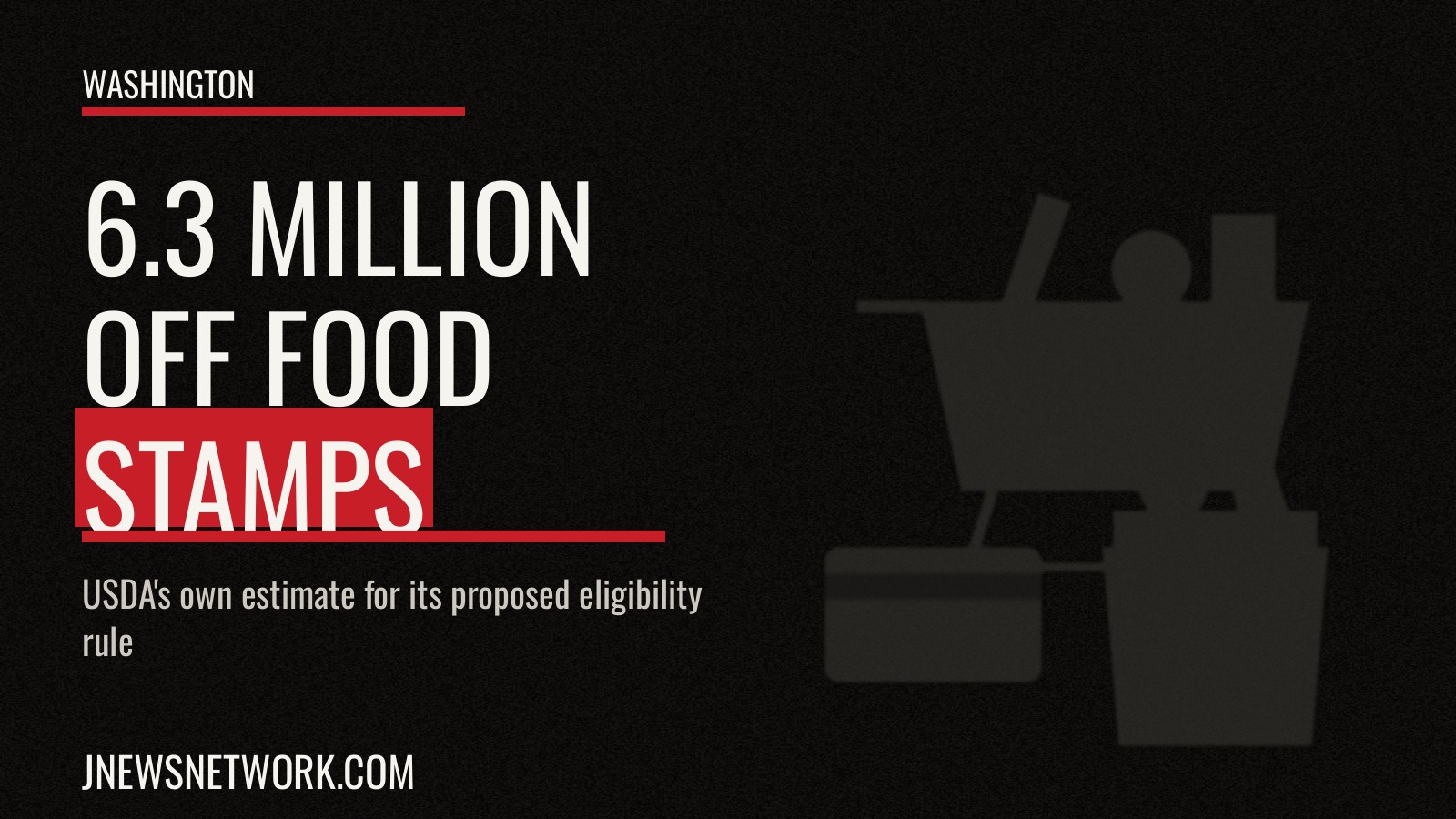
The U.S. Department of Agriculture proposed a rule on Tuesday that would end food stamp benefits for an estimated 6.3 million people, according to the department’s own analysis — the largest single eligibility change yet proposed for the Supplemental Nutrition Assistance Program. The proposed rule, published in the Federal Register on Nov. 10, would sharply limit “categorical eligibility,” the mechanism 46 states now use to qualify households for SNAP automatically. It is a proposal, not a final rule: no one’s benefits change today, and the public has until Dec. 10 to weigh in.
Under current law, a household that receives benefits or services funded by Temporary Assistance for Needy Families (TANF) can be deemed categorically eligible for SNAP without a separate check against the program’s federal income and resource limits. Most states use that authority broadly — a practice known as broad-based categorical eligibility. In states that use it, receiving a TANF-funded service that is not cash can be enough to qualify a household automatically, even when its income or assets sit above the standard federal limits.
The proposed rule would end that route. Categorical eligibility would be limited to households that receive TANF “assistance” as defined at 45 CFR 260.31 — essentially, ongoing cash aid. Every other household would have to qualify for SNAP directly under the federal statutory income and resource limits. The document, titled “Supplemental Nutrition Assistance Program: Reforming Categorical Eligibility,” was issued by USDA’s Food and Nutrition Administration under docket FNA–2026–0661 and signed by Deputy Secretary Stephen Vaden.
USDA estimates that about 16.9 percent of participating SNAP households — 17.6 percent of participants — would no longer receive benefits because their income or resources exceed the federal statutory limits. At full effect in fiscal year 2029, the first year the rule would fully apply, that comes to 3.2 million households containing 6.3 million individuals. The department estimates the change would reduce federal SNAP benefit spending by about $44.649 billion over fiscal years 2027 through 2031. States would see a net spending reduction of about $5.243 billion over the same period, even as their administrative costs rise by an estimated $928.5 million.
The effects would reach past the grocery checkout. Because SNAP participation automatically qualifies children for free school meals, about 1.78 million children would lose that automatic eligibility. USDA estimates roughly 97 percent of them would still qualify by income through another process: about 1.66 million would keep free meals, about 93,000 would move to reduced-price meals, and about 28,000 would pay full price. About 42,000 children could lose Summer EBT benefits beginning in the summer of 2029, including about 13,000 who would remain eligible but are expected not to apply. In the WIC program, of the 22,000 participants now eligible through broad-based categorical eligibility, 16,500 would remain income-eligible — and 5,500 would no longer be eligible.
The department makes its case in blunt terms. “Broad-based categorical eligibility has bloated the welfare rolls for decades,” USDA said in a statement. “It has allowed States to take short cuts, error rates to balloon, and those with income and assets far above federal limits access to a benefit meant for the neediest among us. Correcting this loophole is long overdue.”
Washington has been here before: a similar categorical-eligibility rule was proposed in 2019 and withdrawn in 2021 before it took effect. The new proposal follows the SNAP cuts enacted in the 2025 reconciliation law, Public Law 119–21, the “One Big Beautiful Bill Act,” and USDA published a companion proposed rule the same day that would tighten work requirements for able-bodied adults without dependents.
Comments on the proposal are due on or before Dec. 10, 2026. They can be filed at regulations.gov under docket FNA–2026–0661 or by email to sm.fn.snappdbrules@usda.gov. Read the full proposed rule in the Federal Register.