

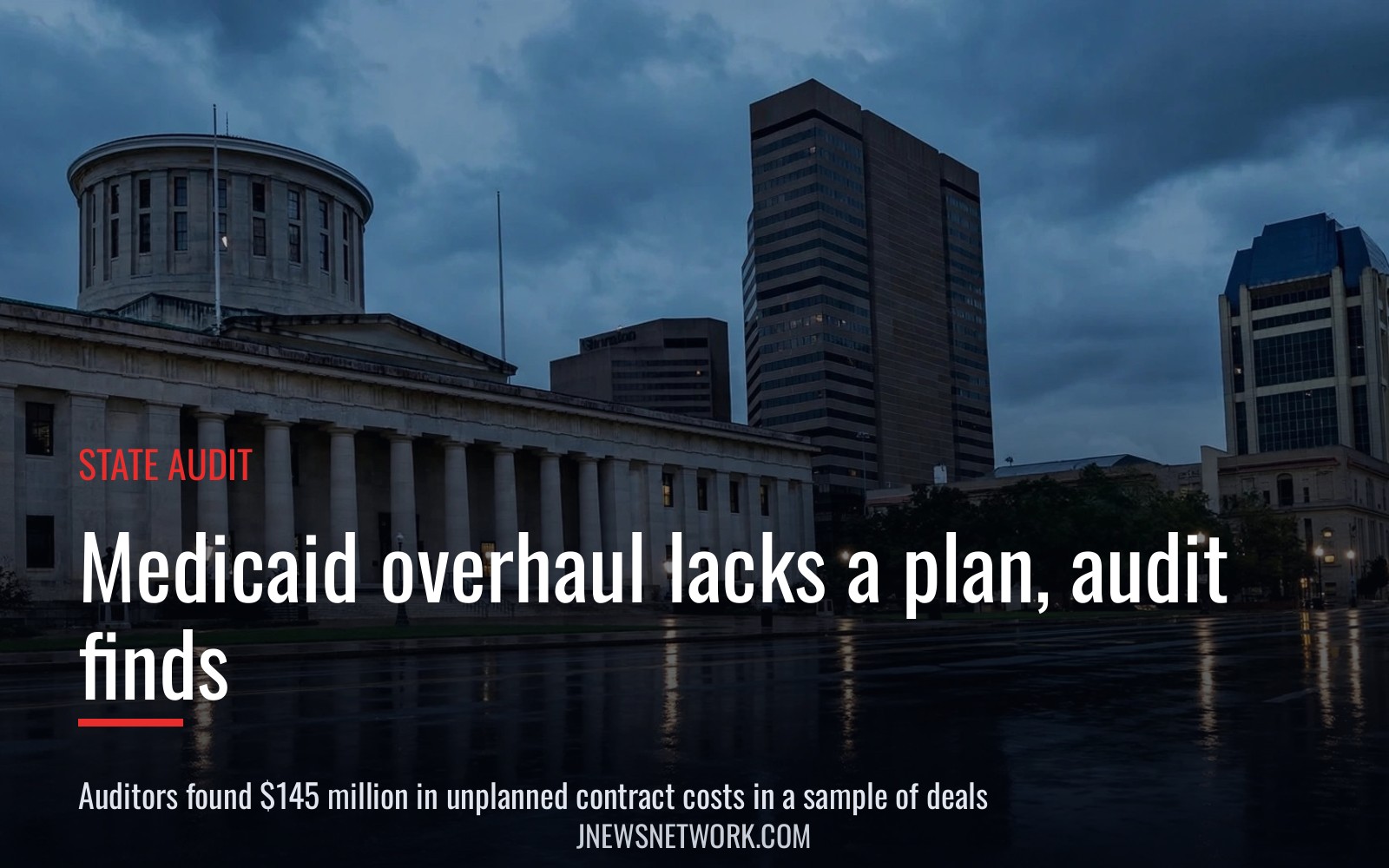
COLUMBUS, Ohio — The state’s yearslong effort to modernize the computer systems and operations behind Medicaid is proceeding without the strategic and operational plans needed to run it well, state auditors concluded in a performance audit released Thursday.
The review of the Ohio Department of Medicaid’s Next Generation initiative found minimal program evaluation, inconsistent contract management and data going unused for improvement, according to Auditor of State Keith Faber’s office. In a sample of vendor contracts, auditors identified more than $145 million in costs that had not been planned.
“We’ve sounded the alarm about Medicaid for the past eight years, and our calls for action have not been adequately addressed,” Faber said.
Lawmakers required the audit in the state’s most recent biennial budget, directing reviewers to examine the modernization’s strategic planning, county oversight and claims processing, among other areas.
Auditors said the department runs on a “culture of compliance” — meeting minimum state and federal requirements rather than measuring whether programs work. They also found gaps in institutional knowledge, saying some employees identified as subject-matter experts or program owners could not explain how their programs are evaluated or what the results showed.
On eligibility, the audit said the department’s quality control reviews only 800 cases every three years out of roughly 850,000 processed applications, and urged the department to expand and standardize those reviews.
The auditors recommended the department adopt organization-wide strategic, operational and staffing plans; tighten contract management; make better use of county-level data to fix application processing; and improve coordination among the agencies that administer Medicaid.
Medicaid accounts for a large share of Ohio’s budget — more than $40 billion a year in health care and related services for lower-income residents, older adults, people with disabilities, pregnant women, infants and children. Since 2019, the auditor’s office has issued a series of reports on the department, including findings that payments were made for services for people who had died or were not eligible.
The department’s response was not included in Thursday’s release. The full audit is posted on the auditor’s website.